The Dog Whisperer of Clevedon
‘The Dog Whisperer’ is my affectionate nickname for 84 years young John Roberts, a true Clevedon legend and a great animal lover. I gave John this name because of his incredible connection with dogs – an almost magical bond. Our own dog, Hector, was a prime example; he would spot John from the bottom of the road and go into a joyful frenzy. This same instant adoration was also true for Mac, a beautiful Labrador that John walked devotedly for twelve years.
John’s ability to earn the trust of any dog he meets is legendary. So, what is it about this man that dogs find so captivating? It’s a combination of his gentle demeanour and his calm energy. He approaches them with quiet confidence, signalling that he is a friend, not a threat. Dogs are masters at reading body language, and John’s relaxed posture and soft-spoken nature convey to them that they are safe and respected. This simple, respectful approach bypasses any natural canine anxiety and goes straight to their heart.


John’s deep-seated affection for animals is also shown through his generous support of several animal charities. His giving spirit helps countless animals, reflecting his compassionate nature and belief in their welfare. This quiet compassion offers a contrast to his feelings about modern technology. He often says he’s a technophobe and feels the digital age is taking over our lives, but when he’s with an animal, the outside world fades away. This sentiment highlights his personal philosophy: a simple, honest connection with a living being is far more valuable than any digital interaction. His love for dogs is not just a hobby – it’s a deep and meaningful part of who he is.
Clevedon Royalty

My husband lovingly refers to John as ‘Clevedon royalty.‘ At 84 years young, John isn’t just a resident; he’s a living piece of the town’s history. Apart from a four-year break in Clifton, he’s spent his entire life here, his deep roots stretching back to the 1600s. It’s a remarkable legacy – John walks the same streets his ancestors did centuries ago, and his memories are interwoven with the town’s evolution. He can recount stories of Clevedon as it once was. In many ways, he is a physical link to our past, a guardian of the town’s collective memory.
Immediate Family

John had three siblings: two sisters, Elaine and Ruth, and a younger brother named David. Sadly, David died from meningitis at just two and a half years old. Elaine is still alive and is 92 years old.
Ruth was married to David Bryant CBE (1931-2020).

David, born in Clevedon, was an English lawn and indoor bowler widely considered one of the greatest players of all time. He had an extraordinary career in lawn bowls, winning a total of nineteen gold medals at World and Commonwealth Games. His titles include three World Outdoor singles and three World Indoor singles championships, six World Indoor pairs titles, and five Commonwealth Games gold medals. For his services to the sport, he was appointed a Member of the Order of the British Empire (MBE) in 1969 and a Commander of the Order of the British Empire (CBE) in 1980.
The Paternal Side

John’s paternal grandfather, Walter, was a painter or artist, a talent that was also passed down to his son. His father, Robert, however, was a builder who constructed houses around the Clevedon area. John worked part-time with his father for four years while also being employed by the council.
Robert’s background was something John knew little about. He believed this was because his father was born out of wedlock in 1904. In that era, the stigma of illegitimacy was severe and deeply rooted in society, a stark contrast to today’s world, where the term itself is considered outdated. John felt his father had carried this burden throughout his life, leaving him with a profound sense of being lost or incomplete. Despite this, John always described him as a loving and good father.
The Maternal Side

John’s maternal grandmother, Edith, was a hard worker who continued to do jobs for wealthy, elderly women well into her seventies. She had ten children, the eldest of whom was John’s mother, Phyllis Mabel, who was universally known as Mabel or Mabe. As the eldest, she was the person her family would turn to with their problems. John described his mother as a quiet woman and the stricter of the two parents, in contrast to his father, who he described as being ‘a bit soft.’ Despite losing a kidney at the age of nineteen and being given only a year to live, Mabe defied all expectations and survived to be seventy-eight, never once complaining about her health. She would joke, saying that ‘creaking gates last the longest’ and a new one to me, ‘you can’t kill couch.’

Her strict values and deep faith played a significant role in John’s childhood. He recalled attending All Saints Church with her at least four times every Sunday for morning prayers, Communion, Sunday school, and Evensong. He was also a dedicated bell ringer. Looking back, he joked that he was so involved in the church that he did ‘everything apart from being a priest.’ This highlights the immense influence his mother and the church had on his early life, shaping his sense of duty and community.
Life in Old Street
John was born at a healthy 10lbs, in the front room of 51 Old Street. His memories stretch back to when he was just four years old, sleeping in the cupboard under the stairs – his mum was convinced it was the safest place in the house during wartime bombing raids. He also remembers the distinctive, slightly rubbery smell of the gas masks. The family lived there until he was eleven, when they had to move because the local hospital needed the accommodation for nurses.
They didn’t go far, though. They simply moved into an identical house just up the road at number 90. His grandmother, Edith, lived at 151 Old Street. He has very fond memories of her, describing her as a ‘real character.’ He often helped his grandmother by painting her house. She would greet him warmly, saying, ‘Come on, my son.’ He recalls her unique way of cutting bread: she would hold the loaf up to her chest and slice it ‘like lace’. Edith had a passion for antiques, and John now cherishes many of her prized pieces, which serve as tangible links to his beloved grandmother and the special bond they shared.


It was at number 90 that John remembers television coming in. They were one of the first homes on the street to have one. His father paid £112 for a 17-inch Cosser set on wheels around 1952. John remembers gathering with about twenty-five people at the house to watch the Queen’s Coronation. He also remembers watching the funeral of King George VI. John lived in that new house until he was forty-two. Before television took over, John found his entertainment through a simple crystal set. He would sit for hours with the headphones clamped to his ears, listening to faint voices and static-filled tunes, a testament to a time when technology was very basic.
It was here at number ninety that John nursed his beloved mother for thirteen years, and when she passed away, he felt as though he needed a change and moved to Clifton for four years. He eventually returned to Clevedon, feeling the familiar pull of home, and continues to live here today.
School Years.
John’s early education began at St. Andrew’s Junior School on Old Street, a building that has since been converted into flats. The convenience of living nearby meant a short daily walk, but one John dreaded, as he hated school with a passion. Following his time there, he enrolled at Clevedon Secondary Modern. The school’s curriculum was comprehensive, even including subjects like Civics that are no longer a standard part of education. Nevertheless, he harboured a deep desire to leave school. He was a quiet, reserved individual until he turned sixteen. The end of his schooling was a profound moment for him, marked by a celebratory bonfire at his dad’s allotment behind his home, where he symbolically burned all his old schoolbooks.


Following his school days, John’s personal style underwent a dramatic transformation, mirroring the counter-culture movement of the era. He fully embraced the hippie aesthetic, letting his hair grow long and cultivating a full beard. His wardrobe became a canvas for his artistic expression. He wore a distinctive Afghan coat, richly embroidered with a beaded moon and a flowing river, and crafted a waistcoat from a salvaged leopard skin. His bell-bottom jeans weren’t store-bought; he personally modified them by opening the seams and adding extra fabric to create a more exaggerated flare. To make them truly unique, he meticulously sewed embroidered stars all the way down one leg. He completed the look with shoes that featured a massive heel and a striking green front.
Cherished Memories of Childhood
The Simple Joys of Summer Evenings
John’s childhood was a time of simple joys and strong family bonds. He often recalls warm summer evenings when his parents would take him and his siblings to the Clevedon Bandstand. Pushed along in their pushchairs, they would sit and listen, mesmerised by the music of a band called the Vodinis. The Bandstand, built in 1887, was a beacon of entertainment for the town, and on those nights, the air would be filled with the sounds of a brass band, a perfect soundtrack to a blissful childhood by the sea. John can still picture the scene, feeling that same sense of wonder as he was captivated by the music.
A Bustling Family Christmas
Christmases were particularly wonderful, filled with warmth and cheer, all thanks to the sheer size of the family. With both grandmothers having ten children each, the holiday gathering was a massive, joyous affair. The house would be bursting with cousins, aunts, and uncles, the air thick with the irresistible aromas of the season.
The Magic of Christmas Morning
The magic of the season was carefully guarded. The trimmings, the tree and all its decorations didn’t go up until Christmas Eve, after all the children were tucked into bed. This made it utterly magical to come down on Christmas morning and see the house transformed into a festive spectacle.
For John, waking up on Christmas Day also meant finding his Christmas stocking filled with treats. He cherishes the memories of his father spending time with him, building a massive fort or setting up his beloved Hornby train set.
A Traditional Feast
Christmas dinner was a traditional affair, always featuring crackers and paper hats, but with a unique main course: they served chicken, which was considered quite a luxury at the time, rather than turkey. The first family turkey wouldn’t appear on the table for many years. Additionally, the butcher would send some quality beef for the meal, which John recalls cost only about six shillings. This highlights the reality of the era: beef was plentiful and significantly cheaper than a prized bird like chicken.
Young John had a decades-long quest for the best part of the bird. He would always ask for the chicken’s leg, a request that went unfulfilled until he grew up and his grandpa passed away. His father, on the other hand, was keen to have the parson’s nose! The meal was always capped off with a Christmas pudding that concealed a special treasure: a silver three-penny bit baked inside. John still possesses these treasured coins today, a tangible link to those childhood feasts.
After Dinner
Despite the lively crowd, the day didn’t revolve around organised fun. There were no traditional games; John wasn’t one for them. Instead, as soon as the meal was over, he preferred to go out and stretch his legs, perhaps to try out a new gift or just enjoy the quiet streets after the joyful chaos of the feast.
Adventures on the Strawberry Line
John’s days were often spent in the countryside, exploring the world around him. He used to go out to Cheddar to pick strawberries on the old Strawberry Line, a journey that felt like a great adventure. The sun beat down as they filled their baskets with juicy, red berries, and the sweet scent of the fruit filled the air.
Friendships and Bonfires at Clevedon Court
John and the Elton children spent countless hours playing at Clevedon Court. Originally built in the 14th century, it is a notable example of medieval domestic architecture, with parts of the original building still intact. It has been the home of the Elton family since 1709 and is now a National Trust property, although the Elton family continues to live there and manage it. The house is known for its beautiful 18th-century terraced gardens and collections of Eltonware pottery and local Nailsea glass. It also has literary connections, having been visited by writers like Alfred, Lord Tennyson and William Makepeace Thackeray.

As a boy of 11 or 12, John vividly remembers climbing all over the house with the Elton sons, even onto the roof, to collect discarded wood and other materials for a massive bonfire on their lawn. These bonfires, a tradition they held every November 5th, were made even more special by the Elton sons, who always brought out cakes and hot drinks to share as they worked.
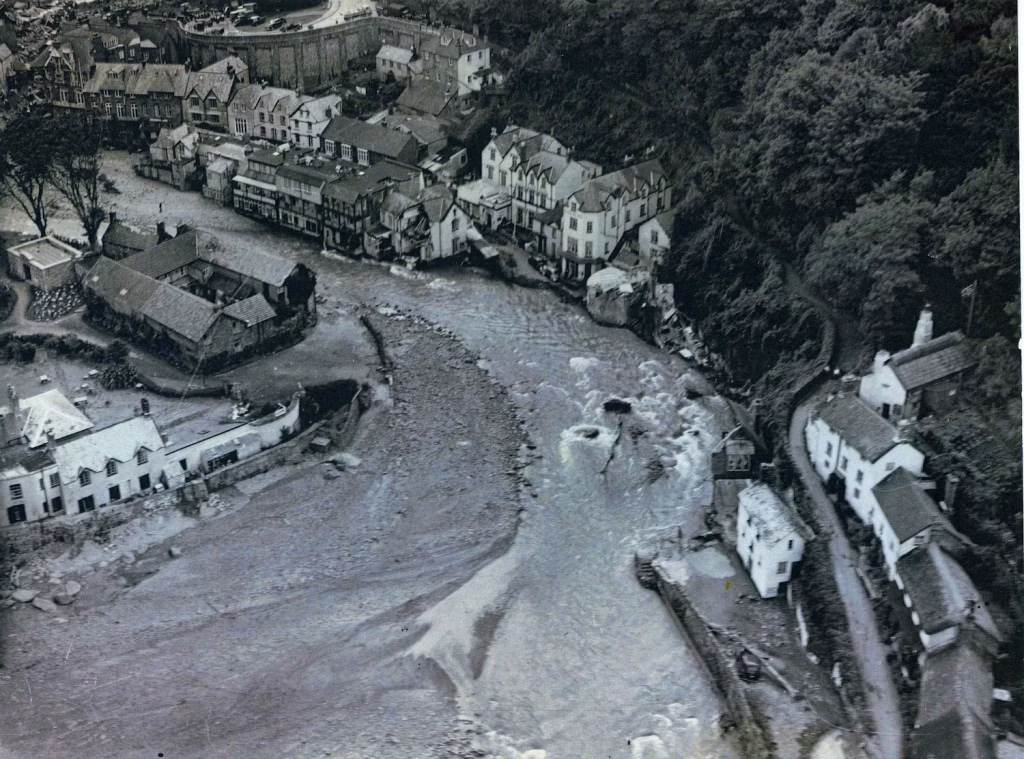
Beyond their adventures, their friendship was also a force for good. As members of the Scouts, John and the Elton children worked together to raise money for the Lynmouth Flood Disaster, which occurred on August 15-16, 1952, in the village of Lynmouth in North Devon. It was caused by a massive amount of rainfall (9 inches in 24 hours) on Exmoor. The steep valleys funnelled the water, along with uprooted trees and boulders, into the village, causing immense
destruction. Thirty-four people died, over a hundred buildings were destroyed, four hundred and twenty people were left homeless, and the landscape was forever changed.
John will never forget the kindness of the Elton family or the thrill of those adventures. More than the places they explored, what truly mattered was the sense of freedom and wonder they shared.
The Carnival
The Clevedon Carnival, once a cherished annual event in Clevedon, was part of the broader tradition of Somerset Carnivals, which date back to the 1600s and were originally held to commemorate the Gunpowder Plot. These carnivals became a vibrant part of local culture, featuring illuminated processions, themed floats, music, and a carnival queen.

Although Clevedon Carnival itself has faded from the calendar, nearby towns like Bridgwater, Weston-super-Mare, and Burnham-on-Sea continue to host spectacular carnivals as part of the Somerset County Guy Fawkes Carnival Association, with Bridgwater’s being the largest illuminated procession in Europe.
The carnival was a major community fundraiser, raising substantial amounts of money for local charities and groups, such as the Cottage Hospital in its early days (1930s) and later for various beneficiaries through the Lions Club.
The carnival, as run by the Lions Club, took place from 1975 to 1997. However, there are records of a Clevedon Carnival dating back much further, with mention of the town’s first Carnival Queen, Rene Harrill, in the early 1930s.
John had very clear memories of one particular year when the carnival was led by Truth Blackmore dressed in white and carrying a mace. It would process from East Clevedon down to the Beach, where the carnival king and queen would be crowned. The queen was usually the girl who had sold the most tickets.
John remembers the year his sister Elaine and her friend Sheila Newman went as Mr and Mrs Nosey Parker, adorned with great long cardboard noses. Another year, they went as Hawaiian dancers in grass hula skirts.
A Timeline of a Local Landmark
John explained that the history of the Curzon cinema is a lot richer than many realise. Originally opened in 1912 as ‘The Picture House,’ its name changed several times over the years. John’s own memories of the cinema date back to when it was called ‘The Maxime,’ a name it held from 1946 to 1953. It was then sold to the Cleeve Cinema Company, which owned a small circuit of cinemas, and the name was changed to the ‘Curzon, the name we all know today. That makes John’s memories of the ‘Maxime’ a pretty unique part of the cinema’s long and rich story.
Saturday Morning Matinees
The Curzon has always been a central part of Clevedon life, a true community hub. For many, like John, it’s a place filled with cherished memories, but its story spans generations.


Saturday mornings were all about the cinema. John and his friends would save up their coins to get in. If they were feeling flush, a lavish ninepence would grant them ascent to the balcony, where they felt like they were looking down on the world. But for a more budget-friendly sixpence, they’d sit downstairs, right in the thick of it. He clearly remembers leaping up and shooting at the ‘Injuns’ as they came over the hill, a small, sixpence-paying warrior lost in the flickering black and white of the screen.

John also remembers that the staff at the Curzon would send a birthday card with a picture of Mickey Mouse and a pink cake on it. It was a well-loved local tradition for a staff member, affectionately dubbed ‘Uncle’, to step out before the feature and announce birthdays. This simple, sweet ritual perfectly encapsulates the feeling of a bygone era, a time when communal experiences were cherished, not just consumed. It was a world that moved at a more leisurely, less complicated pace, where a local cinema was an anchor, a place where a child could spend a Saturday morning and, for a few hours, be an important part of a world that was both massive and intimately his own. It wasn’t just a movie; it was a memory being made, one sixpence at a time.
The staff kept a tight ship. The usherettes were the guardians of the dark, moving like silent spectres with their flashlights, ready to point their beams at anyone making a racket. Their quiet presence was a part of the whole experience, a reminder to respect the silver screen.
John’s first film memory is a vivid one: the well-known romantic comedy, The Moon Is Blue, starring William Holden, David Niven, and Maggie McNamara. He remembers how the film caused quite a stir when it was released, not just for its wit, but for its surprisingly frank dialogue. It was a film that truly felt modern, a stark contrast to the old Westerns he loved as a child.
But the cinema’s role extended far beyond the screen. It was a part of people’s lives in a way that modern cinemas rarely are. John’s own family history is deeply intertwined with it; his sisters even held their wedding reception there, creating a unique memory that underscores the venue’s significance to the community. He can still picture the crowds gathered to celebrate.
The Curzon wasn’t just a building; it was where generations of families, friends, and neighbours went for entertainment, celebration, and a bit of movie magic. Its continued presence in Clevedon today is a testament to its enduring legacy as a beloved community space.
Post-War Clevedon
After the war ended, the lingering presence of American soldiers brought a rare moment of joy to the children of Clevedon. John vividly recalled a special Christmas party they held, a vibrant contrast to the austere years of wartime. He remembered the soldiers’ generosity, how they gave silk stockings to the mothers, a cherished luxury in a time of rationing. But for the children, the true highlight was a small, magical gift: their very first piece of spearmint, as it was called at the time. The sweet, minty taste was an entirely new sensation, a little American novelty that made a huge impression.
Echoes of War: Prisoners of Portishead
Beyond the joyous party, the post-war landscape held other, more sombre memories. John recalled the sight of Italian prisoners of war. He’d watch them as they came down through Swiss Valley from Portishead, their presence a quiet reminder of the conflict that had just ended. These men, far from their homes, were engaged in labour, doing maintenance work on the paths in Clevedon. John’s memory of them was not of enemies, but of a silent procession of men in a foreign land, a stark image etched into his childhood mind.
Growing Up in Clevedon: The Salthouse Pavilion
For John, the heart of his teenage universe in Clevedon was the Salthouse Pavilion, also known as the Clevedon Pavilion. He described it as a truly significant landmark in the town’s history, a place that defined a special time in his life. Built in the late 1920s by the Keesey family, the pavilion was a new addition to their existing hotel, the Salthouse, a historic building that had been converted from two old cottages. The house has always been called Salthouse, from its construction in the 1820s by one of John’s ancestors, which I suspect may be news to him. Located next to the original Salthouse House and the old servants’ cottages, the Pavilion was strategically placed near the newly opened Marine Lake and the Salthouse Fields. This area quickly blossomed into a lively destination, attracting both locals and visitors.


The Pavilion was a hugely popular venue for dances and other forms of entertainment, turning the Salthouse into a vibrant social hub. John explained that it was the place to be for rock and roll, roller skating, and jukebox music. The energy was electric; it was always packed, and he absolutely loved it. He vividly remembers going three times a week and dancing so much that he lost two stone. For him, it wasn’t just a dance hall; it was a community hub where everyone he knew gathered, and the air was buzzing with energy. He distinctly remembers that they used to have bands playing at the Pavilion, and he couldn’t recall alcohol ever being sold there. The nights would end at 10:30 p.m., which was a well-known and respected closing time. It was a place where teenagers could escape, lose themselves in the music, and be kids. John felt that the loss of a place
with such a special atmosphere was a real shame, as there was nothing quite like it in Clevedon today.
Before the Pavilion, his sisters would take him to a small room at the front of Sunhill House for rock ‘n’ roll. While those were great memories, they couldn’t compare to the Pavilion. He also recalls how the annual Police Balls were held there, and he and his friends would always try to sneak a peek at the special events.
The Salthouse Pavilion was ultimately demolished in the 1960s. This demolition, along with the construction of the New Hall (now the Princes Hall), played a role in the formation of the Clevedon Players, a modern drama group created by the merger of two local groups, the Playgoers and the Coleridge Players.
The name Salthouse remains a significant part of Clevedon today. The Salthouse pub remains a popular local spot, and the nearby Salthouse Fields are a cherished green space used by both residents and visitors for picnics, games, community events, and festivals.
A Rock and Roll Mecca

John recalls that Clevedon Pier was another popular spot for rock and roll. A dancehall was added to the pierhead in 1913 to attract more visitors, but it was in 1957 that the pier truly became a destination for young people. Pier master Bernard Faraway installed a jukebox, electrifying the atmosphere and turning the pier into a pleasure palace for adrenaline-charged nights of dancing. The pier’s fame wasn’t limited to locals; teenagers from as far away as Weston-super-Mare made the pilgrimage to join in.
The original jukebox was a humble machine – a small, inexpensive British imitation of its American counterparts. Styled more like a household fridge, it held no more than 20 records. The story goes that it was once thrown into the sea after an argument. Its successor, the BEL-AMI 200, was a gleaming symbol of a new era. This magnificent machine, in silver, pink, and charcoal, housed 200 hit records and helped make the pier an additional hub for Clevedon’s youth culture.
Decades later, for the pier’s 150th anniversary, the pier team asked people like John to share their memories. When asked if he’d be willing to dance on the pier again, John didn’t hesitate. He called up the same ladies he’d danced with all those years ago. Together, they returned to the planks that held so many of their youthful memories and danced once more, fittingly, to ‘Rock Around the Clock.’ For a few days, the experience made John a local celebrity. He recalls walking into a local shop and being recognised, with people exclaiming, ‘Oh, I saw you yesterday!’ In that moment, the history of the pier and the stories of the people who shaped it became one. Check out John’s dancing for yourself in this report from the BBC: https://www.bbc.co.uk/news/av/uk-england-somerset-41212090.
The World of Work
John’s first job was at the Co-op when he was just fifteen years old. The building itself had a bit of history, as it was once an old outfitter’s shop called W.Hiatt’s. When the Co-op took it over, the store was a strange mix of half men’s tailoring and half hardware. It was a memorable start to his working life.


A few years later, John found a job that he truly loved: working part-time for the council as a rent collector. This role was a perfect fit for him because he was a natural people person. His daily rounds took him to some beautiful areas, including Blagdon, where he’d drive, stop to chat, and then drive on to the next place. He quickly got to know the residents and always looked forward to their conversations. His genuine care made a lasting impression on the community he served. As Jane Lily recalled, ‘John was always very kind. We met him when I was about twelve, and he became the rent collector for the Council houses. He once took all three of us to Clifton for a look around, and my mum couldn’t get over that!”.
Unfortunately, John’s career was cut short at fifty-one. After experiencing some serious heart trouble, his doctor gave him a stark warning: if he didn’t retire immediately, his health would not hold up. John, who has just celebrated his 84th birthday, took the advice and has been enjoying his retirement ever since. Although leaving a job he loved was difficult, he’ll always cherish the memories and connections he made with the people on his rounds.
Adult Memories
The Collapse of Clevedon Pier
October 16th, 1970, started out like any other day, but it’s etched into John’s memory forever. He remembers the clock read 10.20 a.m. when it happened. He remembers the sound of it… it was a deep, mournful groan that seemed to echo through the entire town. It was the sound of the pier giving up. He rushed down to the seafront with everyone else, and the sight was just… heartbreaking. Two massive sections of the pier had vanished, swallowed by the muddy Bristol Channel. It wasn’t the sea that took it, though. It was a test. A team was checking its strength, and after years of neglect, ‘the old girl could no longer withstand the pressure.’

John described the pier as the town’s pride and joy, and seeing it broken like that was a tremendous shock for everyone. Then came the real insult: they wanted to tear down what was left. That sparked a fire in the entire community. They weren’t going to let that happen. The fight went on for ten years, with writing letters, holding meetings, and just making a fuss. John remembers the day of the Public Inquiry like it was yesterday. It felt like the fate of the town was hanging in the balance. But then Sir John Betjeman, that famous poet, stepped in and called the pier ‘the most beautiful pier in England.’ That was it. That was the turning point. The demolition order was lifted, and the campaign had a purpose. After nineteen years of hard work, they finally did it. Seeing the pier reopened in 1989 was a moment of pure joy and relief for John and his friends. ‘It was more than a structure; it was a symbol of what we could accomplish when we came together. It’s a memory I’ll always hold close.’

It was around this time that John discovered a new way to help with the ongoing upkeep of the pier. The famous ‘Sponsor a Plank’ fundraiser, which allowed people to purchase plaques to be placed on the pier, with the proceeds going toward its preservation. John thought it was a brilliant idea for raising money. John, his sisters Lily and Ruth and her husband David all have plaques on the pier. The plaques remain for at least ten years, serving as a beautiful way to acknowledge special events, such as birthdays or marriages, or to remember a loved one. The more than 14,000 plaques on the pier have become a legacy for the town.
John’s Nightlife: A Tour of Clevedon’s Lively Spots

Clevedon’s nightlife provided John with countless happy memories, and a few key spots hold a special place in his heart.
The Pier Hotel was a particular favourite, and for good reason. It was always a lively place, especially once the evening crowds gathered. John loved the electric atmosphere downstairs, which was constantly boosted by the discos held in the ballroom. For a quieter drink, he’d head upstairs to the popular Sunset Bar for a great view or simply enjoy the spacious bar on the ground floor.
Just across from the pier was The Towers, run by a friendly Italian family. This spot offered a cherished but straightforward pleasure: John recalls going there specifically for a glass of hot orange. The real draw, though, was the buzzing energy around the jukebox. He spent many memorable evenings there, dancing the night away.
For a more relaxed, local feel, his regular end-of-week destination was the Old Inn. Dating back over 400 years, this pub was the epitome of cosy, with its two small, intimate bars. Its proximity to his home made it the perfect Friday night haunt. On other nights, he also enjoyed the atmosphere at the Rose and Crown, often joining in the friendly competition at their popular pub quizzes.
Clevedon’s Old Shops
John has fond memories of Clevedon’s old shops, which were more than just places to buy things; they were central to the community. He especially misses the old hardware store in the village, a place where you could find almost anything you needed.
He also remembers Billets, a charming florist shop. His sister worked at Mark’s the Chemist, which stood out with its beautiful, coloured glass bottles displayed in the window. On Christmas Eve, the family would visit the wine merchant on the seafront to pick out special wines for the holidays.
For John, these shops were vital social hubs, a place where neighbours would run into each other, catch up, and share the local news. The personal touch and community spirit of these old businesses are something he truly misses.
I asked John about his favourite things about Clevedon today.
The Best of Both Worlds
John’s favourite thing about Clevedon today is its perfect balance of small-town community and modern convenience. It’s a place that effortlessly provides everything you need: thriving shopping areas, plenty of excellent local restaurants and pubs, and cultural gems like the famous Clevedon Pier, the Curzon and the Marine Lake. You can enjoy the genuine tranquillity and close-knit feel of the town without sacrificing amenities. And for the rare occasions when more is needed, whether it’s a big-city concert or access to major work opportunities, the vibrant culture of Bristol is just a short trip away, offering the best of both worlds.
A Strong Sense of Community

John feels that the community spirit in Clevedon is something truly special. He described it as a place where people connect, where there’s a real sense of belonging that comes from knowing your neighbours, seeing familiar faces, and feeling a part of the town’s fabric. He has a lot of good friends who look after him now because it’s a place where people genuinely look out for each other. As an example, he cites his friend Sue, whose dog Mac he walked for 12 years. Mac may have gone, but his bond with Sue and her family remains stronger than ever. He also talked about his very good friend, Chris, remembering a lovely day out they’d recently had at Tarr Steps, which included pints of Guinness and red salmon sandwiches that he’d prepared. Friendships you can’t put a price on and make day-to-day life richer and more meaningful.
John feels as though he’s on borrowed time, with a lot of his friends having passed away, but he doesn’t mind getting old if he can still do things. Having said that, his aunts lived to 100, 102, 97, and 86, and his uncle lived to 98. It’s clear he has good genes. At the time of the interview, John was facing a period of intense frustration. He had recently fallen and hurt his back, leaving him in significant pain, and was awaiting his second round of cataract surgery (the first having been successfully completed). Despite these setbacks, and even though he also suspects he will soon need hearing aids, John’s fiercely independent nature means he refuses to be held back. He continues to tackle his daily tasks, driven by the belief that as long as he can stay active, he’ll be happy.
The Unmistakable Coastline

And then, there’s the coastline. The beautiful, rugged coastline is a constant reminder of Clevedon’s unique charm. Whether it’s a peaceful walk along the pier, a breezy afternoon by the water, or simply taking in the stunning views, the sea has a way of grounding you. It’s an ever-present backdrop that provides a sense of calm and beauty that you just can’t find inland. John felt it was a privilege to live so close to such a magnificent natural feature.
A Place to Call Home
For John, the best part about Clevedon is that it’s more than just a town; it’s a feeling. It’s the one place that truly fits him – a perfect mix of people, scenery, and atmosphere that makes life feel just right. That’s why he says, ‘I couldn’t live anywhere else,’ because for him, there’s no other place in the world that feels like home.